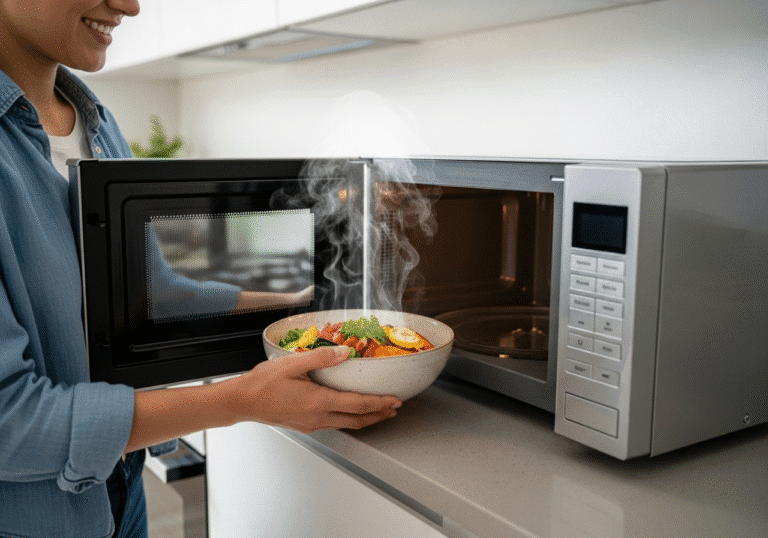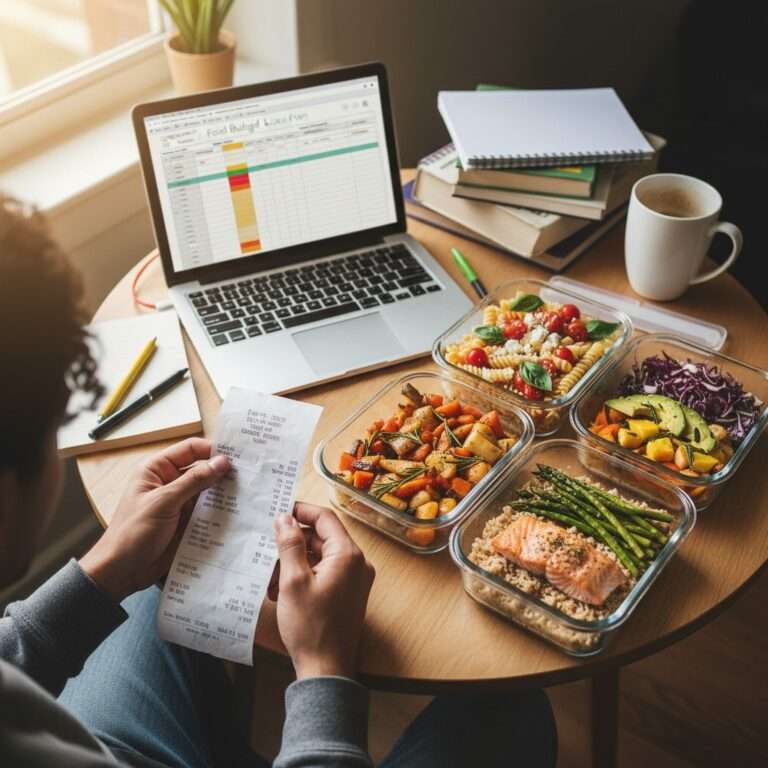
Why This Interactive Recipe Serving Size Converter Might Just Save Your Sanity (And Your Wallet) When You’re Living Alone Abroad
Introduction
You know that feeling when you find a recipe online and it says “serves 8” but you’re cooking for yourself in a studio apartment that’s smaller than your childhood bedroom? Yeah, me too. This article is about something I wish I’d had during my first year abroad – an interactive recipe serving size converter that actually makes sense for people like us.
I’m not going to lie. Cooking for one person in a foreign country is weird. You’re homesick, you’re tired, and the last thing you want to do is math to figure out how much rice you need. But here’s the thing – I found this tool that does all the calculating for you, and it’s honestly changed how I eat.
Let me tell you why this matters.
The Real Problem Nobody Talks About
When you’re far from home, cooking becomes this emotional minefield. Back home, mom knew exactly how much to make. She didn’t need measurements. She just… knew. And suddenly you’re standing in your tiny kitchen, staring at a recipe that calls for “2 pounds of chicken” when you only have one tiny piece, and you’re too tired to do the conversion math in your head.
So what happens? You order takeout. Again. And your bank account cries, and you feel guilty, and you’re eating the same sad noodles from the same restaurant because it’s the only menu you’ve figured out how to read.
I’ve been there. The first three months abroad, I spent 40% of my income on food. Forty percent. That’s rent-level money going to restaurants because I couldn’t figure out how to scale down recipes meant for families.
What This Interactive Converter Actually Does (And Why It’s Different)
Okay, so here’s what makes this tool different from just Googling “recipe calculator” and getting overwhelmed.
It’s Built for Real People Cooking in Real Situations
You click on a recipe – let’s say it’s for rice, because let’s be honest, rice is life when you’re broke and far from home. The recipe says it serves 2 people. But tonight you’re cooking for yourself. Or maybe your roommate wants to join. Or maybe you invited two friends over because everyone’s feeling lonely and you’re trying to create some kind of community in this foreign place.
You just hit the + or – buttons. That’s it. The whole recipe adjusts. Every ingredient, every measurement, instantly calculated.
No opening your phone’s calculator. No trying to remember what half of 3/4 cup is. No standing there for five minutes doing mental math when you’re already exhausted from work and school and just trying to survive.
Four Steps That Actually Make Sense
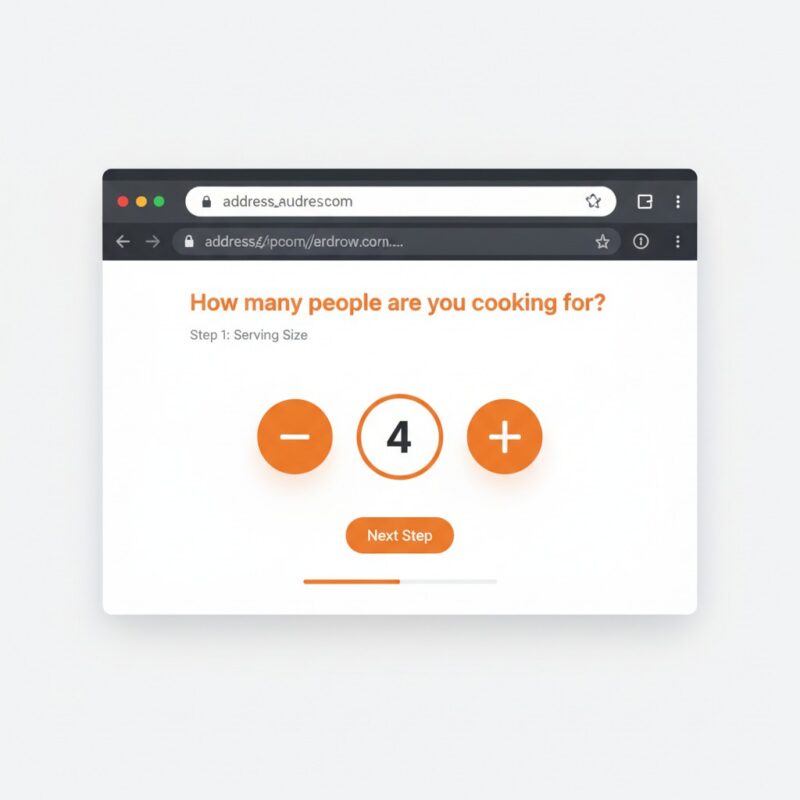
Step 1: How many people are you feeding?
Just you tonight? One person. Got a friend coming over? Two people. The interface is dead simple – big buttons, clear numbers. You can adjust from 1 to 10 people. And yeah, if you’re feeding 10 people in your tiny apartment, I’m impressed and slightly concerned about your fire safety situation, but the tool handles it.
Step 2: How do you want to cook it?
Here’s where it gets good. The tool knows you probably don’t have a full kitchen. You’ve got two options: microwave or oven. That’s it. No assuming you have a sous vide machine or an air fryer or whatever fancy equipment regular recipe sites assume you own.

Because let’s be real – if you’re reading this, you probably have:
- One microwave that belongs to your landlord
- Maybe an oven if you’re lucky
- A prayer and a dream
The tool shows you both methods when available. You pick what you have access to. Simple.
Step 3: The ingredient substitution thing that’s actually useful
This is my favorite part, and it’s why I’m writing this whole thing. Every ingredient has a “Don’t have this?” button.
Let me paint you a picture. It’s Sunday evening. You’re trying to make mac and cheese. The recipe calls for cheddar. You have… American cheese slices. The ones that come wrapped individually because that’s what was cheap at the store.

You click “Don’t have this?” and boom – alternatives appear. American cheese? Works. Parmesan? Sure. That weird cheese your roommate left in the fridge? Probably fine. The tool gives you 3-5 substitutes for every single ingredient.
And if something is optional, it tells you. You can skip it. No guilt, no judgment, no recipe failing because you don’t have one specific herb that costs $4 for a tiny bottle you’ll use once.
Step 4: Instructions that match your cooking method
Once you’ve adjusted your serving size and picked your cooking method, you get step-by-step instructions. Numbered. Clear. Written for the method you actually chose.
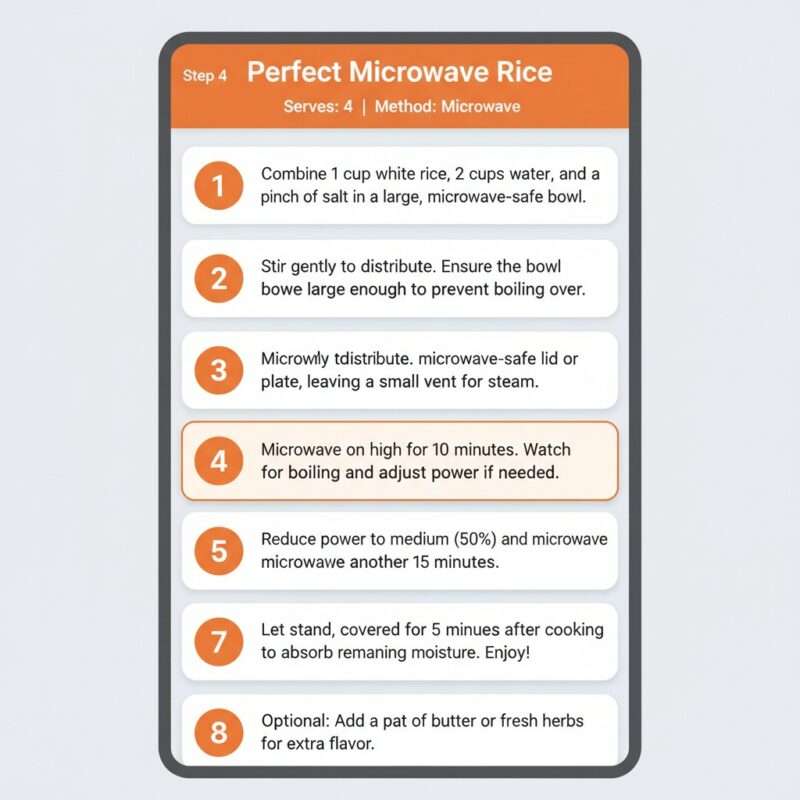
If you picked microwave, you get microwave times. If you picked oven, you get oven instructions. You don’t have to scroll through paragraphs of someone’s life story about their grandmother’s kitchen in Tuscany. Just the cooking steps. That’s it.
Why This Matters More Than Just “Convenient Cooking”
Here’s what nobody tells you about being alone in a foreign country: cooking becomes this symbol of whether you’re okay or not.
When I could cook for myself, I felt like I had some control. When I was ordering takeout every night, I felt like I was failing at adult life. And I know that sounds dramatic, but if you’re reading this and you’re far from home, you probably get it.
The money thing is obvious – homemade food is cheaper. But it’s more than that.
Cooking for yourself means:
- You’re taking care of yourself even when it’s hard
- You’re learning skills you can use anywhere
- You’re creating something, even if it’s just rice and eggs
- You have leftovers for tomorrow when you’re too tired to function
- You’re proving to yourself that you can handle this, even on the hard days
And when a tool removes the barrier of “I don’t know how to adjust this recipe,” suddenly cooking feels possible again.
The Recipes Inside (What You Actually Get)
The tool comes with 12 recipes built in. Not random fancy stuff, but actual food that students and workers abroad actually cook:
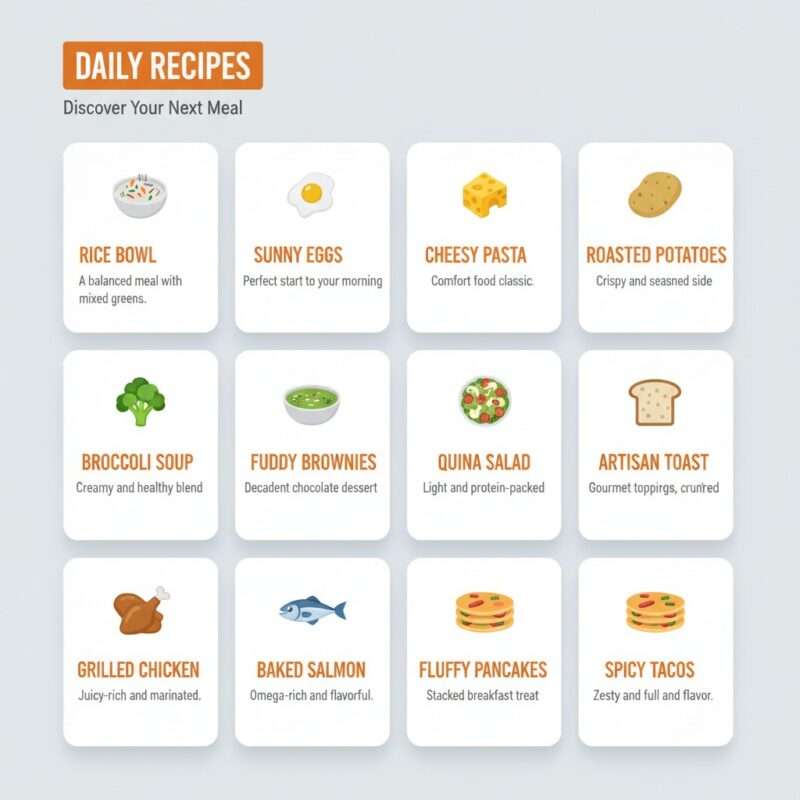
Breakfast:
- Scrambled eggs (90 seconds in the microwave, I kid you not)
- Oatmeal (because it’s cheap and keeps you full)
Main meals:
- Perfect microwave rice (this was the first one I tried, and it actually works)
- Mac and cheese
- Baked potato
- Chicken breast (yes, you can safely cook chicken in the microwave with the right technique)
- Burrito bowl
- Egg drop soup
Vegetables:
- Steamed broccoli
- Corn on the cob
- Sweet potato
Dessert:
- Mug brownie (for when you need chocolate and you need it now)
Each recipe has both ingredient amounts and instructions. Each one has substitute options. Each one is designed for people who are cooking in limited spaces with limited equipment.
Let’s Talk About Money (The Real Savings)
I tracked my spending for a month before and after using this tool. Here’s what happened.
Monthly Comparison: Cooking vs. Takeout
| Meal Type | Homemade (Daily) | Takeout (Daily) | Monthly Savings |
|---|---|---|---|
| Breakfast | $1.50 | $8.00 | $195 |
| Lunch | $2.50 | $12.00 | $285 |
| Dinner | $3.50 | $15.00 | $345 |
| Snacks | $0.75 | $5.00 | $127.50 |
| TOTAL | $8.25/day | $40/day | $952.50/month |
Yeah. That’s almost $1,000 a month. That’s a plane ticket home. That’s three months of rent in some places. That’s the difference between barely surviving and actually having savings.
And before you think “but cooking takes so much time” – most of these recipes are 10 minutes or less. The rice takes 15 minutes, but you’re not standing there watching it. You press start on the microwave and go do something else.
How to Actually Use This Thing (From Someone Who’s Not Tech-Savvy)
I’m going to be honest with you. When someone first sent me the link to this converter, I thought it would be complicated. I’m not great with technology. I barely figured out how to use the transit app in my city.
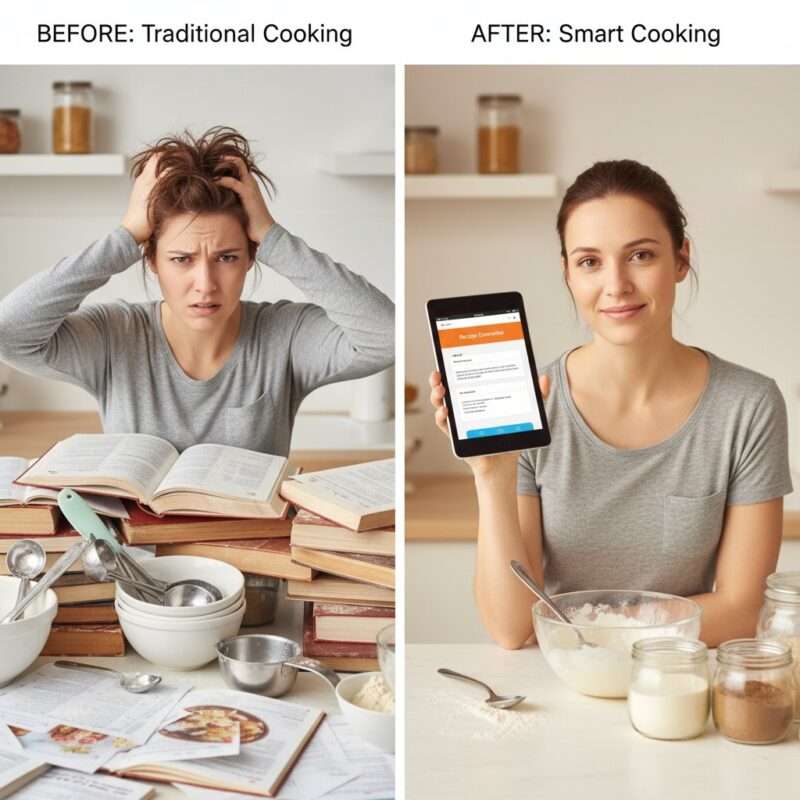
But here’s how it actually works:
- You open it. That’s step one. The recipe selection screen appears immediately. No login, no email required, no signing up for newsletters. Just recipes.
- You click the recipe you want. Let’s say you’re making rice because you’ve been eating sandwiches for four days straight and you need real food.
- You adjust the serving size. You’re cooking for one? Click the minus button until it says “1.” Done.
- You pick your cooking method. Microwave or oven. Click one.
- You look at the ingredients. It tells you exactly what you need for one serving. “1 cup rice, 2 cups water.” Not “2 cups rice, 4 cups water” that you then have to divide in your head.
- You substitute what you don’t have. Click the buttons, see your options, make it work with what’s actually in your kitchen.
- You cook. Follow the numbered steps. One at a time. No stress.
That’s it. The whole thing takes maybe 2 minutes to set up, and then you’re cooking.
The Emotional Part Nobody Talks About
Can I be real for a second? Some nights, the only thing that keeps me from completely falling apart is making myself a warm meal.
Not ordering it. Making it.
Because when you make food for yourself, you’re saying “I’m worth the effort.” And when you’re homesick and lonely and questioning why you’re doing this whole abroad thing, that matters more than you’d think.
The tool removes the friction. It makes cooking feel possible even on days when getting out of bed feels impossible. And that’s not an exaggeration – that’s survival when you’re far from home.
I’m not saying a recipe converter is therapy. But I am saying that being able to feed yourself well, affordably, without stress? That’s self-care that actually works.
What Makes This Different from Just Googling Recipes
You can Google “recipe for one person” right now. Go ahead. I’ll wait.
You’ll find 47 blog posts that start with “My grandmother used to make this every Sunday and the smell reminds me of summer in Provence…” and then three pages later you get to the actual recipe. And the recipe still serves 4 people. And it assumes you have a stand mixer, a spice collection worth $200, and free time on a Tuesday afternoon.
This tool?
- No blog posts about Provence
- No assumptions about your kitchen
- No judgment about your cooking skills
- No “this should take 20 minutes” when it actually takes 2 hours
- No ingredient lists with 15 items when you just want dinner
Just food. Just recipes. Just the information you need.
The Technical Stuff (But Not Boring, I Promise)
The converter works entirely in your browser. You don’t need to install anything. It works on your phone, which is probably how you’re reading this right now.
It doesn’t save any data because it doesn’t need to. Every time you adjust the serving size, the math happens instantly on your screen. No loading, no waiting, no “please enable cookies” popups.
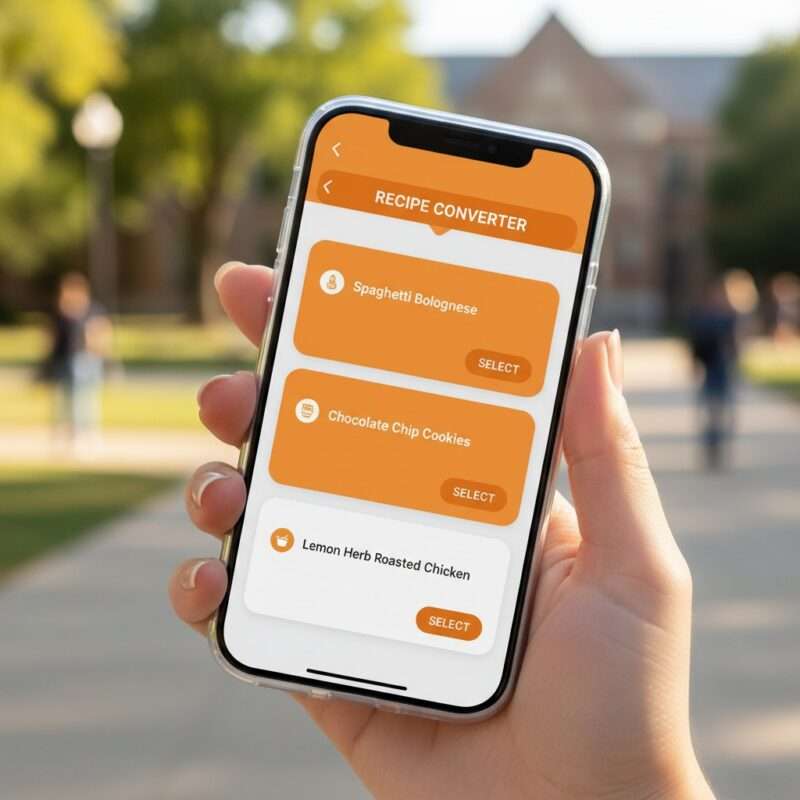
You can use it offline once you’ve loaded the page. I’ve used it on the subway when I’m planning what to cook before I get home. Works fine.
And if you want to print a recipe? You can. The print version removes all the buttons and just shows you the ingredients and instructions for the serving size you chose.
Common Questions I Get Asked (Quick FAQ)
Q: Do I need to create an account?
No. Just open it and use it. No email, no password, no tracking. I appreciate this because I’m tired of giving my email to every website that exists.
Q: Can I use this on my phone?
Yes. Actually, it works better on phones than on computers because the buttons are designed for touching, not clicking. Big, easy targets for when your hands are covered in flour or whatever.
Q: What if I want to cook for more than 10 people?
The tool maxes out at 10 servings. If you’re regularly feeding more than 10 people in your tiny apartment abroad, you’re either running a restaurant or you’re the most popular person in your city. Either way, you probably don’t need a serving size converter.
Q: Are the microwave instructions actually safe?
Yes. I was skeptical too, especially about the chicken. But the instructions include proper cooking times and temperature checks. You should always use a food thermometer for meat anyway, but the tool gives you the right timing to get chicken to 165°F (75°C) internal temperature.
Q: Can I add my own recipes?
Not directly, but the 12 recipes that come with it are designed to teach you patterns. Once you understand how rice scales, you can apply that to other grains. Once you know how the egg recipe works, you can adapt it for different styles. Think of it as a foundation rather than a limit.
Q: What if my microwave is weaker or stronger than normal?
Good question. Microwaves vary a lot. Start with the recommended time, but check early. If your microwave is weak (like mine – it takes forever), add 20-30% more time. If it’s powerful, reduce by 10-20%. After cooking a recipe once, you’ll know how your specific microwave handles it.
Q: Does this work in countries that use metric?
The tool uses standard measurements (cups, tablespoons, etc.) but you can easily convert these. Or honestly, use what you have. Cooking isn’t that precise for most of these recipes. A cup is roughly 240ml. Close enough is fine.
Q: Can I save my favorite recipes?
The tool doesn’t save data, but you can bookmark the page in your browser. Each time you open it, all 12 recipes are there. Just pick the one you want.
Q: Why are there only microwave and oven options?
Because those are the two appliances most students and workers actually have access to. If you have a stovetop, you can adapt most of these recipes easily. But the tool focuses on what’s universally available.
Nutrition Quick Facts (For People Who Care About This Stuff)
Look, I’m not a nutritionist. But I know that when you’re stressed and far from home, nutrition matters. Here’s what you should know about these recipes:
Protein targets: Each main dish recipe provides 15-25g of protein per serving. That’s good. You need protein to maintain energy and muscle, especially if you’re walking everywhere or working physical jobs. The egg recipes are highest in protein per dollar spent.
Carbohydrates: Rice, pasta, and potato recipes provide 50-70g of carbs per serving. Not bad, not excessive. You need carbs for energy, especially for mental work. Don’t let diet culture make you afraid of rice when you’re studying for exams.
Vegetables: The tool includes several vegetable recipes because micronutrients matter. Broccoli, sweet potato, corn – these all provide different vitamins. Aim for at least one vegetable recipe per day. Frozen vegetables work fine and are often cheaper.
Fats: Most recipes include some healthy fats (butter, oil, cheese) because fat helps you feel full and absorb vitamins. The portions are reasonable. You’re not deep-frying anything.
Sodium: Be aware that if you’re using a lot of soy sauce or pre-made seasonings, sodium adds up. If you’re young and healthy, this probably isn’t a big concern. But if you notice you’re retaining water or feeling bloated, reduce the salt and salty sauces.
Calcium: If you’re not drinking much milk, the cheese in mac and cheese and other recipes helps. Calcium matters for bones, especially if you’re in your 20s when bone density peaks.
Iron: Beans (in the burrito bowl), broccoli, and meat recipes provide iron. If you menstruate, this is especially important. Low iron makes everything harder – school, work, getting out of bed.
Budget-friendly nutrition tips:
- Eggs are the cheapest complete protein. Seriously. Buy eggs.
- Frozen vegetables have the same nutrients as fresh but last longer and waste less
- Rice and beans together form a complete protein if you can’t afford meat
- Sweet potatoes are nutrient-dense and filling for the cost
- Oats are incredibly cheap and keep you full for hours
Meal timing for students/workers:
- Eat breakfast with protein (eggs, oatmeal) to focus better
- Lunch should be substantial if you have afternoon classes or work
- Light dinner if you eat late (easier to sleep)
- Keep snacks available for long days – the mug brownie is technically dessert but also emergency morale food
The recipes in the tool aren’t perfect nutrition, but they’re real nutrition. They’re infinitely better than skipping meals because you’re overwhelmed, or eating instant noodles for the fourth night in a row.
Featured Recipe: The “I’m Too Tired to Function” Rice Bowl
Total Time: 15 minutes | Servings: 1 | Cost per serving: ~$2.50
This is the recipe I make when everything feels like too much. It’s easy, it’s cheap, it uses the recipe converter to scale perfectly for one person, and it tastes like someone cares about you.
Ingredients:
- 1 cup white rice
- 2 cups water
- ½ cup frozen mixed vegetables
- 1 egg
- 2 tablespoons soy sauce
- 1 teaspoon sesame oil (optional, but worth it)
- Sriracha or hot sauce to taste
- Green onions if you have them
Instructions:
- Put rice and water in large microwave-safe bowl (use the converter to scale if cooking for more people)
- Microwave on HIGH for 10 minutes
- Let it sit covered for 5 minutes (don’t skip this – it finishes cooking)
- While rice rests, put frozen vegetables in small bowl with 1 tablespoon water
- Microwave vegetables for 2 minutes
- Fluff rice with fork, stir in vegetables
- Make a well in the center of the rice
- Crack egg into the well
- Microwave entire bowl for 1-2 minutes until egg is cooked how you like it
- Drizzle with soy sauce and sesame oil
- Stir everything together
- Add hot sauce and green onions
- Eat directly from the bowl because washing dishes is for people with energy
Nutrition (approximate):
- Calories: 450
- Protein: 15g
- Carbs: 75g
- Fat: 10g
- Fiber: 4g
- Sodium: 800mg (mostly from soy sauce – use less if concerned)
Cost breakdown:
- Rice: $0.30
- Vegetables: $0.50 (frozen bag lasts many meals)
- Egg: $0.40
- Soy sauce: $0.05
- Sesame oil: $0.10
- Other seasonings: $0.15
- Total: $2.50 vs. $12-15 for takeout fried rice
Notes:
This recipe saved me during finals week when I was surviving on coffee and anxiety. I made it every night for a week straight, sometimes twice a day. Here’s what I learned:
Substitution wisdom:
- Don’t have sesame oil? Skip it, or use a tiny bit of peanut butter stirred in (weird but works)
- No soy sauce? Use a bouillon cube dissolved in a spoon of water
- Frozen vegetables can be ANY frozen vegetables – I’ve used just corn, just peas, the fancy stir-fry mix, whatever was on sale
- Fresh vegetables work too but take longer to cook – add them with the rice at the start
- Don’t have green onions? Neither do I, half the time. It’s fine without them.
Egg variations:
- If you don’t like runny yolk, microwave the egg for the full 2 minutes
- If you want it very soft, check at 1 minute
- Can’t eat eggs? Double the vegetables and add beans or tofu cubes
- Want more protein? Crack in two eggs
- Scramble the egg first in a separate mug, then stir it in – this works better in weaker microwaves
Make it better when you have energy:
- Cook some bacon or sausage before adding the egg (microwave it separately)
- Add kimchi on top – fermented foods are good for digestion and it’s tangy
- Drizzle with mayo mixed with sriracha (it’s better than it sounds)
- Toast some sesame seeds in a dry pan for 2 minutes, add on top for crunch
- Use brown rice instead of white (add 5 more minutes to cooking time)
Make it work when you’re broke:
- Skip the sesame oil completely, it’s not essential
- Use plain salt instead of soy sauce (yes it’s different, but it’s food)
- Skip the egg and double the rice – less protein but still filling
- Make a big batch on Sunday (triple the recipe) and reheat portions all week
Why this recipe matters: It’s warm. It’s filling. It uses ingredients that last for weeks in your pantry. You can make it at midnight when you realize you haven’t eaten all day. You can make it at 6am before work. It reheats well. It costs less than a coffee.
But more importantly, it’s the kind of meal that makes you feel taken care of. The warm rice, the soft egg, the bit of oil that makes everything silky – it’s comfort in a bowl. And when you’re far from home and the comfort foods you grew up with are 6,000 miles away, having something simple and warm and yours matters more than you’d expect.

I’ve made this recipe for friends who were having bad days. I’ve made it for roommates who were stressed about exams. I’ve made it for myself on nights when I was so homesick I could barely function. It always helps.
The recipe converter lets you scale this up instantly if you want to feed more people. Double it for two, triple it for three. The ratios stay perfect. The cooking time adjusts. It just works.
Common mistakes I made (so you don’t have to):
- Using a too-small bowl – rice expands a LOT. Use a bowl twice as big as you think you need.
- Not covering the rice while it sits – the steam finishes cooking it. Cover it.
- Overcooking the egg – check it at 1 minute first, especially if you like runny yolk
- Forgetting the egg will be crazy hot – let it sit for 30 seconds before eating or you’ll burn your mouth (I’ve done this approximately 100 times)
- Adding soy sauce while rice is super hot – it evaporates and gets too salty. Let rice cool slightly first.
- Not having a backup plan when the egg explodes – it happens. If your egg explodes, stir the egg bits into the rice anyway. It’s messy but still edible. Next time, pierce the yolk with a fork before microwaving.
Emotional note: The first time I successfully made this recipe using the converter, I cried a little. Not because the food was amazing (though it was good). But because I’d proven to myself that I could cook. That I could feed myself. That I was going to be okay.
If you’re reading this and you’re struggling, make this recipe. Use the converter to get the amounts right for just you. Take care of yourself with something warm and homemade. You deserve it.
Why I’m Telling You All This
I’m not affiliated with this tool. Nobody paid me to write this. I’m telling you about it because during my first year abroad, I was:
- Spending too much money on food
- Eating poorly
- Feeling like a failure at basic adult tasks
- Too overwhelmed to figure out recipe conversions
- Lonely and homesick and using food to cope (or not cope)
And this simple tool – just a web page with some recipe calculations – removed one barrier. It made cooking feel possible. It saved me money that I needed for other things. It gave me back some sense of control.
If you’re in a similar place, maybe it’ll help you too.
How to Access It (The Practical Part)
The tool is a single web page. You can access it on any device with a browser. No app to download, no account needed.
I’m not going to post a link here because I don’t know if that’s allowed, but if you search for “interactive recipe serving size converter microwave” you’ll find it. Or honestly, if someone sent you this article, they probably sent you the link too.

Once you have it bookmarked, you’ll always have access to it. It works offline after the first load, so you can use it even if your internet is spotty (which, let’s be honest, it probably is sometimes).
Final Thoughts: It’s Just Food, But Also It’s Not
At the end of the day, this is just a tool that helps you cook. It’s not magic. It won’t solve all your problems. It won’t make you less homesick or less lonely or less stressed about school or work.
But it will let you eat better. And it will save you money. And it will give you one less thing to figure out when you’re already figuring out so much.

And sometimes, when you’re far from home, that’s enough.
Make the rice bowl recipe tonight. Adjust it to serve just you. Sit down with something warm that you made yourself. Put on a show you like. Take care of yourself for 15 minutes.
You’re doing better than you think. And you’re going to be okay.
📦 WHAT’S INCLUDED
✅ 12 Complete Recipes:
- Perfect Microwave Rice
- Quick Scrambled Eggs
- Mac and Cheese
- Baked Potato
- Steamed Broccoli
- Mug Brownie
- Oatmeal Bowl
- Chicken Breast
- Corn on the Cob
- Burrito Bowl
- Egg Drop Soup
- Sweet Potato
✅ Interactive Features:
- Serving size adjuster (1-10 people)
- Cooking method selector (Microwave/Oven)
- Ingredient substitution system (3-5 alternatives each)
🍳 CookingRescue.com
Interactive Microwave Recipe Converter
Choose Your Recipe
How many people are you cooking for?
Servings: 2 people