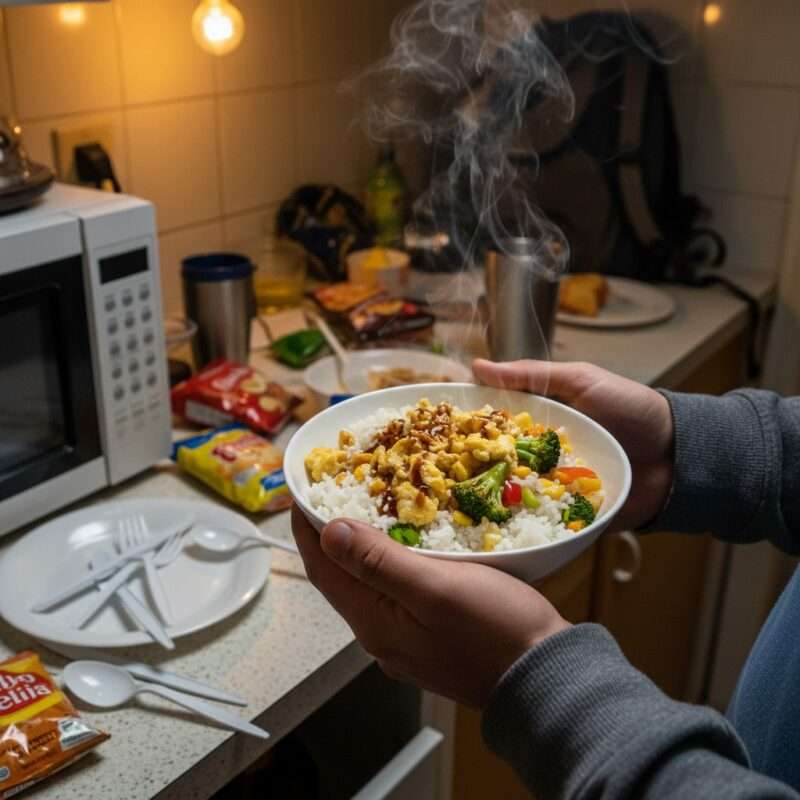
Quick Microwave Cooking Ideas for Hostel Living: Your Survival Guide When Home Feels a Million Miles Away
Quick Summary (160 words)
This article is your practical guide to surviving hostel life when all you’ve got is a shared microwave and a dream of eating something that doesn’t come in plastic packaging. Living in a hostel abroad—whether you’re studying or working—comes with its own set of challenges, and cooking definitely tops that list.
You’ll discover quick microwave meals that actually taste good, cost almost nothing, and can be made in the chaos of a shared hostel kitchen where someone’s always using the microwave at exactly the moment you need it. We’re talking real, filling food that won’t drain your budget or require equipment you don’t have.
This guide covers everything from 5-minute breakfast solutions to midnight snacks that won’t wake your roommates. Plus, you’ll get honest cost breakdowns showing exactly how much money you’ll save, nutrition facts that matter when you’re far from home, and troubleshooting tips for the inevitable disasters. No fancy cooking skills required—just hunger and determination.
Introduction: The Hostel Kitchen Reality Nobody Warns You About
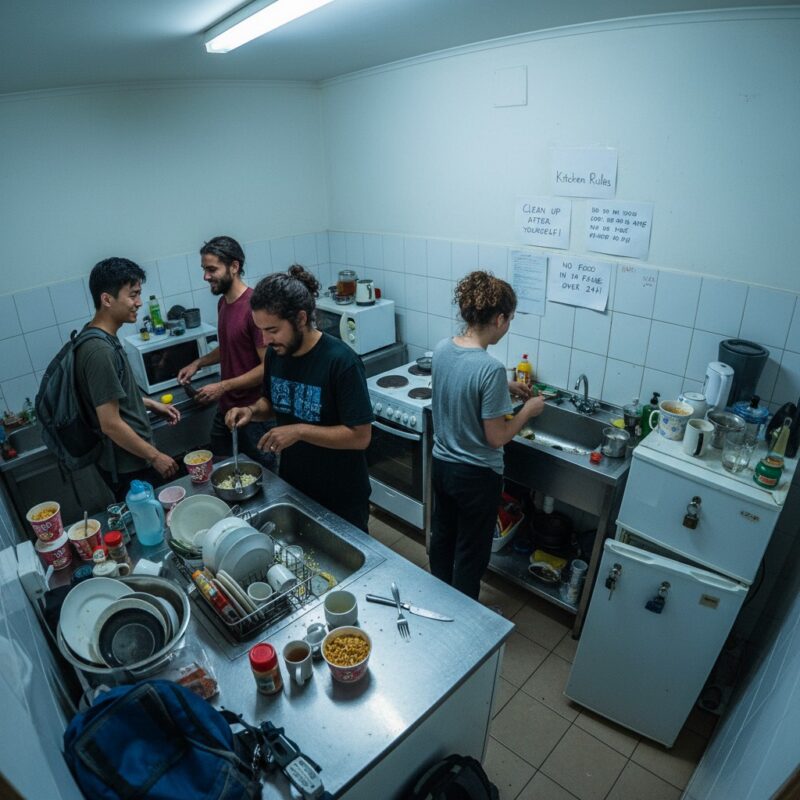
So you’re living in a hostel. Far from home. Sharing a kitchen with twelve other people who all seem to be cooking fish at 7 AM.
And you’re standing there with your sad little instant noodles, wondering how you ended up here.
Let me tell you something nobody mentions in those “study abroad adventure!” brochures: hostel cooking is its own special kind of challenge. You’ve got one shelf in a crowded fridge, maybe a cabinet that barely fits three plates, and a microwave that’s seen better days—probably around 2009.
But here’s the thing. You can actually eat decent food in this situation. Real food. Food that doesn’t make you sadder than you already are on those evenings when homesickness hits hard and everything feels overwhelming.
I’ve talked to hundreds of hostel residents—students, migrant workers, travelers stuck in limbo—and they all say the same thing: cooking in a hostel feels impossible until you figure out the tricks. Then it becomes your survival skill. Sometimes your lifeline.
This article isn’t going to teach you how to become a chef. That’s not the point. The point is helping you eat well enough to function, save money you desperately need for other things, and maybe just maybe create small moments of comfort when you’re eating alone in a place that doesn’t feel like home yet.
Why Hostel Microwave Cooking Matters More Than You Think
Before we get into the recipes and techniques, let’s talk about why this even matters.
The Emotional Weight of Eating Alone
You know what nobody tells you? Eating becomes this weird emotional thing when you’re far from home.
Back home, meals meant people. Conversation. Someone asking if you ate yet. The smell of cooking that meant someone cared enough to make food for you.
Here, it’s you, a paper plate, and the hum of a microwave in a kitchen where everyone avoids eye contact because we’re all just trying to get through our day.
And when your cooking fails—when your meal turns into a disaster it’s not just frustration. It feels like one more thing you can’t get right in this new place where everything is harder than it should be.
That’s why having reliable microwave recipes matters. Not just for nutrition, but for those small victories. Successfully making yourself a decent meal when you’re tired and lonely and questioning all your life choices that counts for something.
The Money Reality
Let’s be brutally honest about finances.
You came here to study or work, probably with a tight budget. Every dollar, pound, euro, rupee whatever currency you’re wrestling with matters. Eating out three times a day will destroy your budget faster than you can say “I’ll just get one takeaway.”
The math is simple but painful: if you spend $10 on lunch and dinner daily, that’s $300 a month. For many hostel residents, that’s more than rent. It’s the difference between calling home regularly and rationing video calls. Between saving for emergencies and constantly being broke.
Microwave cooking in your hostel means spending $2-3 per meal instead. Same $300 becomes $60-90. That’s $210+ back in your pocket every single month.
That money? That’s plane tickets home. That’s breathing room. That’s not panicking every time an unexpected expense appears.
The Shared Kitchen Chaos
Here’s another truth: hostel kitchens are battlegrounds.
Someone’s using all four stovetop burners. Someone else has been “soaking” dishes for three days. The fridge smells like a science experiment. And that one person who cooks elaborate meals every night has somehow claimed all the counter space.
The microwave, though? Usually available. Quick. Requires minimal space. No one’s judging your 2-minute rice. You’re in and out before the kitchen politics even start.
Learning to cook efficiently with just a microwave means you’re not dependent on kitchen availability, not competing for space, and not waiting 45 minutes to use the stove while your stomach eats itself.
Essential Hostel Microwave Survival Kit
Before we get into recipes, let’s talk about what you actually need. Because hostel life means limited everything—limited space, limited budget, limited storage.
Your Bare Minimum Equipment
You can start with almost nothing and gradually build up. Here’s the essentials:
Must-Haves (Start Here):
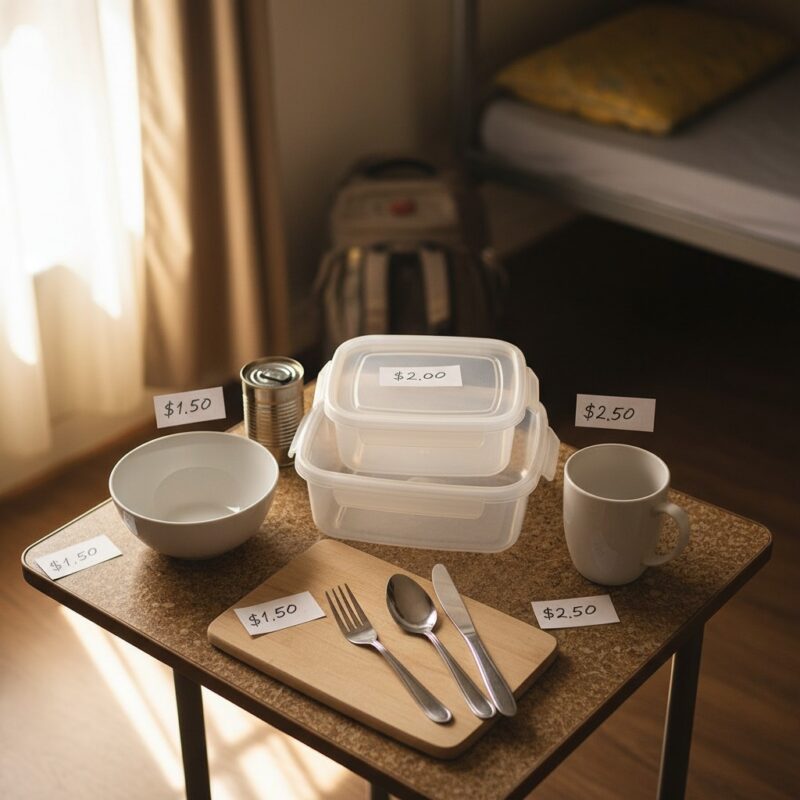
- 2-3 microwave-safe containers with lids (plastic or glass)
- 1 large microwave-safe bowl
- 1 microwave-safe mug or large cup
- Fork, spoon, knife
- Small cutting board (can be plastic, super cheap)
- Can opener
Total cost: $10-20 if you shop smart (dollar stores, second-hand shops, student sales)
Nice-to-Haves (Add Later):
- Plastic storage containers for leftovers
- Mixing bowl
- Measuring cup
- Small colander (for draining things)
- Cheap knife set
Your Basic Ingredient Shelf
You can’t keep much in a hostel, so focus on stuff that lasts:
Pantry Staples (Keep in Your Cabinet):
- Rice (huge bag, lasts forever)
- Pasta or instant noodles
- Canned beans
- Canned tuna or chicken
- Peanut butter
- Cooking oil (small bottle)
- Salt, pepper, garlic powder
- Hot sauce or soy sauce (flavor = everything)
- Tea or coffee
Fridge Items (Keep in Your Shelf):
- Eggs (game-changer)
- Butter or margarine
- Cheese (if you can afford it)
- Whatever vegetables you can manage
- Milk or non-dairy alternative
These basics can make dozens of different meals. We’re going for versatility, not variety, because you’ve got one shelf and limited funds.
Quick Microwave Recipes That Actually Work
Alright, let’s get to what you actually came here for—food you can make in a hostel microwave without losing your mind.
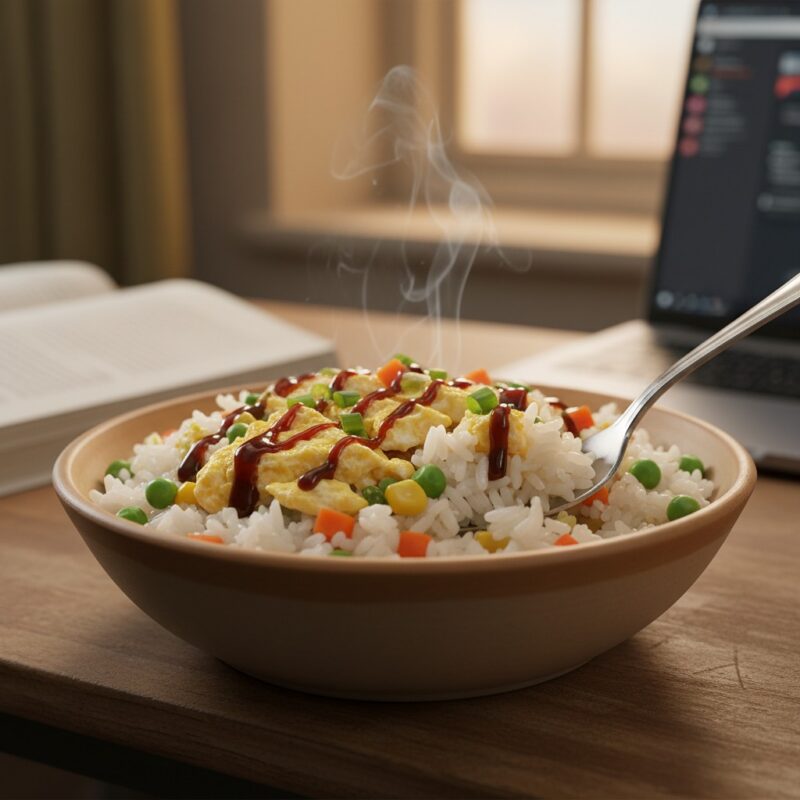
1. The Hostel Hero: Microwave Rice Bowl
This is your foundation meal. Master this, and you’ll never go hungry.
What You Need:
- 1/2 cup rice
- 1 cup water
- Whatever protein you have (egg, canned tuna, beans, leftover meat)
- Whatever vegetables (frozen, canned, fresh—doesn’t matter)
- Sauce (soy sauce, hot sauce, ketchup, whatever)
How to Make It:
- Put rice and water in a large microwave-safe bowl
- Microwave on high 5 minutes
- Microwave on 50% power for 10 minutes
- Let sit 5 minutes (important—don’t skip this)
- While rice is sitting, crack an egg in a mug, microwave 45 seconds (or heat up your other protein)
- Heat vegetables (frozen ones take 2-3 minutes)
- Mix everything together, add sauce
- Eat and feel like a functional human
Why This Works: It’s filling, cheap (under $1.50), uses basic ingredients, and you can make it different every time by changing the protein and vegetables. Some nights it’s Mexican-ish with beans and hot sauce. Other nights it’s Asian-ish with soy sauce and egg. Whatever you need it to be.
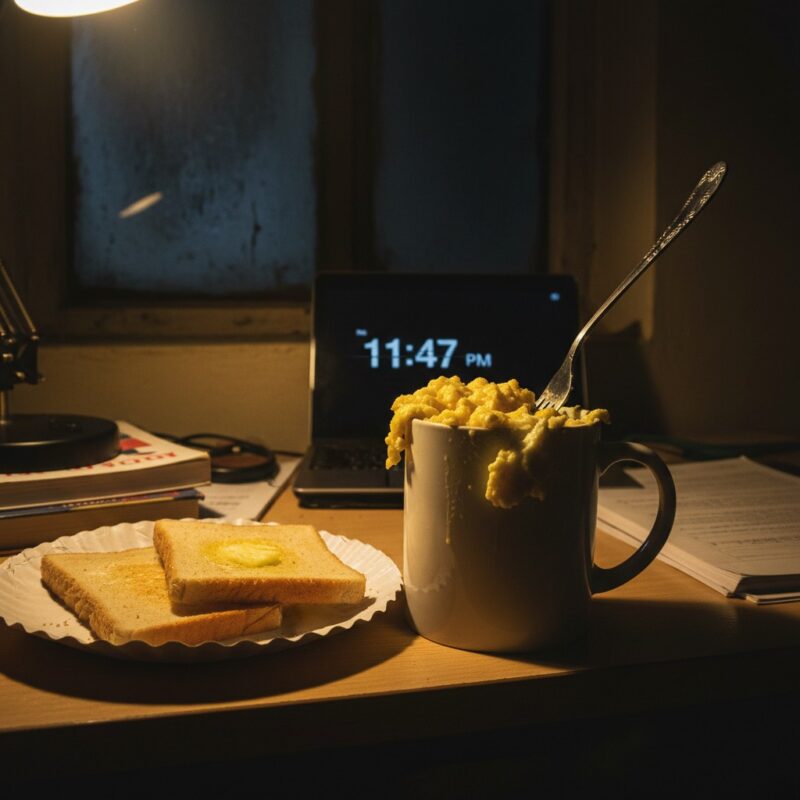
2. The Night-Shift Special: Microwave Scrambled Eggs
For when you get home late and just need protein fast.
What You Need:
- 2 eggs
- Splash of milk or water
- Salt, pepper
- Butter (small amount)
How to Make It:
- Grease a mug with butter
- Crack eggs into mug
- Add milk, salt, pepper
- Whisk with a fork until mixed well
- Microwave 45 seconds
- Stir with fork
- Microwave another 30-45 seconds
- Done
Eat it with: Toast, wrapped in a tortilla, on top of rice, by itself while standing in the kitchen at midnight questioning your life choices.
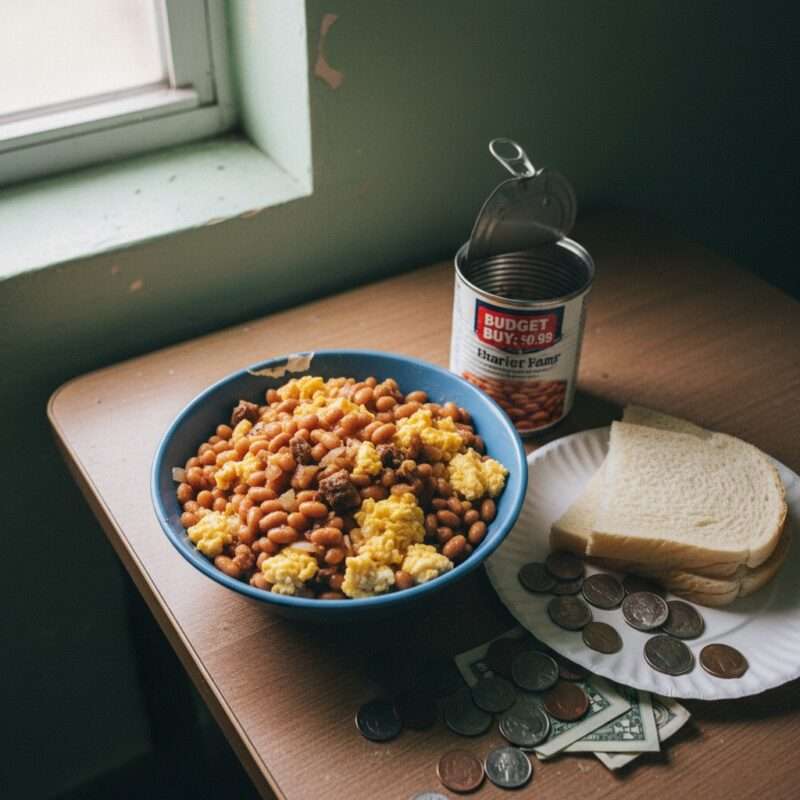
3. The Budget Stretch: Microwave Baked Beans & Egg
When money’s really tight and you need something filling.
What You Need:
- 1 can baked beans (cheap as dirt)
- 1 egg
- Bread (if you have it)
How to Make It:
- Put beans in microwave-safe bowl
- Heat 2 minutes
- While beans are heating, scramble an egg in a mug (method above)
- Mix hot beans and cooked egg together
- Eat with bread or just eat it
Cost: Under $1. Filling. Has protein. Not fancy, but it works.
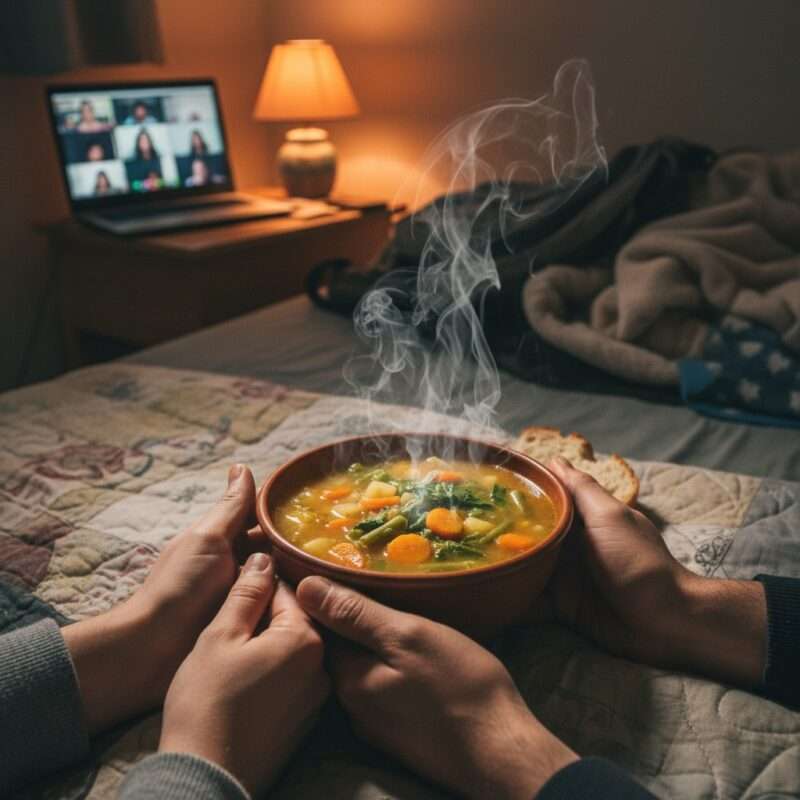
4. The Homesick Helper: Microwave Soup
When you need something warm and comforting.
What You Need:
- 1 can of soup OR bouillon cube + water + whatever you have
- Crackers, bread, or nothing
How to Make It:
- If canned: dump in bowl, heat 2-3 minutes, stir, heat 1 more minute
- If making from scratch: bouillon cube + 2 cups hot water + add canned vegetables, noodles, frozen vegetables, whatever
- Heat 3-4 minutes
- Eat slowly while pretending you’re somewhere warm and safe
Why This Matters: Some days you don’t need fancy food. You need something hot that reminds you of being taken care of. Soup does that.
5. The Shared-Kitchen Speedrun: Microwave Pasta
For when everyone’s using the stove and you’re about to pass out from hunger.
What You Need:
- Pasta (1 cup)
- Water (enough to cover pasta by 2 inches)
- Sauce (jar, can, whatever)
- Salt
How to Make It:
- Pasta + water + pinch of salt in large bowl
- Microwave on high 3 minutes
- Stir
- Microwave 3 more minutes
- Stir again
- Microwave 2-4 more minutes until tender (check it)
- Drain (carefully, it’s hot)
- Add sauce, heat 1 minute
- Done
Reality Check: It’s not perfect pasta. The texture’s slightly off compared to stovetop. But when the kitchen is full and you’re hungry, who cares? It’s edible, it’s filling, and you made it in 15 minutes without competing for the stove.
6. The Breakfast Hack: Microwave Oatmeal Plus
Not just boring oatmeal—oatmeal that actually gives you energy.

What You Need:
- 1/2 cup oats
- 1 cup milk or water
- Peanut butter (1 tablespoon)
- Banana (if you have it)
- Honey or sugar
How to Make It:
- Oats + milk in big bowl (use big bowl or it will overflow and make a mess)
- Microwave 1.5 minutes
- Stir
- Microwave 1 more minute
- Stir in peanut butter, sliced banana, sweetener
- Let cool 1 minute
- Eat and have energy until lunch
Why Peanut Butter: Protein. Keeps you full. Cheap. Doesn’t need refrigeration. Basically perfect for hostel life.
7. The Late-Night Craving: Microwave Mug Cake
For when you’re stressed and need chocolate. Or just need something sweet that reminds you happiness exists.
What You Need:
- 4 tablespoons flour
- 3 tablespoons sugar
- 2 tablespoons cocoa powder
- 3 tablespoons milk
- 3 tablespoons oil
- Tiny splash of vanilla (if you have it, skip if not)
How to Make It:
- Mix dry ingredients in mug
- Add wet ingredients
- Stir until smooth
- Microwave 60-90 seconds
- Let cool 2 minutes (it’s lava-hot)
- Eat directly from mug while watching something that makes you feel less alone
Honest Assessment: It’s not your grandmother’s cake. But it’s sweet, chocolate, warm, and made by you in 2 minutes. Sometimes that’s exactly enough.
Dealing With Hostel Kitchen Challenges
Let’s talk about the problems nobody mentions until you’re living them.
Challenge #1: The Microwave is Always Busy
The Reality: Peak hours (7-9 AM, 6-8 PM) means waiting. Sometimes forever.
Solutions:
- Cook at off-peak times (10 PM, 6 AM, 2 PM)
- Make extra and save for busy times
- Have backup cold meals (sandwiches, wraps)
- Make friends with your kitchen-neighbors and coordinate timing
- Be that person who asks “how much longer?” politely
Challenge #2: Limited Fridge Space
The Reality: Your shelf is tiny. Maybe one shelf. Maybe just a corner.
Solutions:
- Buy only what you’ll use in 2-3 days
- Focus on non-perishables (rice, pasta, canned goods)
- Use eggs (compact, versatile, last 3-4 weeks)
- Rotate stock—use oldest items first
- Accept you can’t meal prep like people with normal kitchens
Challenge #3: Things Keep Disappearing
The Reality: Food theft happens. It sucks, but it happens.
Solutions:
- Label everything clearly
- Keep valuables in your room (coffee, nice snacks)
- Don’t leave dirty dishes (makes you a target)
- Make friends—people don’t steal from friends
- Accept small losses, protect big items
- Store expensive ingredients in room if needed
Challenge #4: Everything Smells Like Everyone’s Cooking
The Reality: Your pasta will smell like someone’s curry. The fridge smells like a nightmare. Everything is an olfactory assault.
Solutions:
- Store dry goods in sealed containers
- Keep perishables covered in fridge
- Accept this is your life now
- Clean up immediately after cooking
- Be considerate (others suffer from your food smells too)
Money Matters: Real Cost Breakdowns
Let’s do the math because this is probably why you’re here.
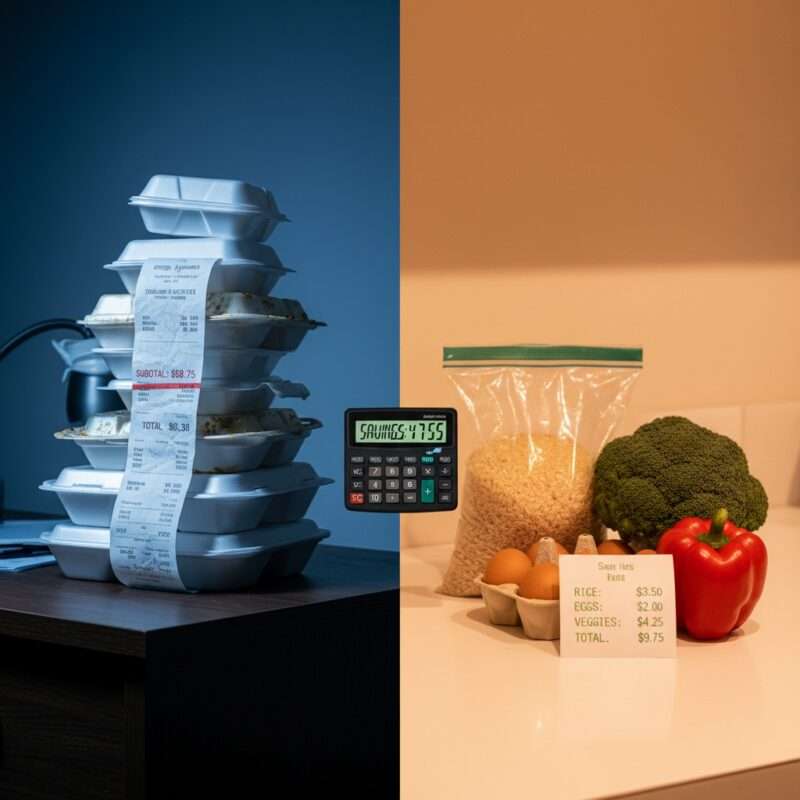
Weekly Hostel Microwave Meal Costs
| Meal Type | Ingredients | Cost Per Meal | Weekly (7 days) |
| Rice Bowl | Rice, egg, frozen veg, sauce | $1.50 | $10.50 |
| Scrambled Eggs | Eggs, milk, bread | $1.20 | $8.40 |
| Beans & Egg | Can of beans, egg | $1.00 | $7.00 |
| Pasta | Pasta, jar sauce | $1.80 | $12.60 |
| Oatmeal | Oats, peanut butter, banana | $0.80 | $5.60 |
| Soup | Can of soup or homemade | $1.50 | $10.50 |
| Average Microwave Meal | Various | $1.30 | $9.10 |
The Takeout Comparison
| Meal Type | Typical Cost | Daily (2 meals) | Weekly | Monthly |
| Fast Food | $8-12 | $16-24 | $112-168 | $480-720 |
| Restaurant | $12-18 | $24-36 | $168-252 | $720-1080 |
| Food Delivery | $15-25 | $30-50 | $210-350 | $900-1500 |
| Hostel Microwave | $1.30 | $2.60 | $18.20 | $78 |
Your Real Savings
Scenario 1: Moderate Takeout User
- Previously: $15/day average (1 takeout, 1 cheap meal) = $450/month
- Now: Microwave cooking = $78/month
- Savings: $372/month = $4,464/year
Scenario 2: Heavy Takeout User
- Previously: $30/day (mostly delivery/restaurants) = $900/month
- Now: Microwave cooking = $78/month
- Savings: $822/month = $9,864/year
What That Money Means:
- Flight home: 2-3 times per year instead of once
- Emergency fund: Actual savings instead of constant anxiety
- Better living: Upgrade from 8-bed dorm to 4-bed room
- Social life: Money to actually go out with people
- Stress reduction: Not panicking about money constantly
Nutrition Quick Facts for Hostel Living
You’re probably not eating as well as you should. Let’s fix that without being preachy.
Why Hostel Nutrition is Hard
The Real Problems:
- Limited storage = limited variety
- No routine = skipped meals
- Stress eating = bad choices
- Loneliness = appetite changes
- Budget = cheap often means less nutritious
Minimum Daily Nutrition Goals
You don’t need perfect nutrition. You need good enough to stay healthy and focused.
Basic Daily Targets:
- Protein: 2-3 servings (eggs, beans, peanut butter, canned fish, chicken)
- Carbs: 3-4 servings (rice, pasta, oats, bread)
- Vegetables: 2-3 servings (frozen counts, canned counts, whatever you can manage)
- Fruits: 1-2 servings (banana, canned fruit, juice if desperate)
- Fats: Don’t avoid them—peanut butter, cooking oil, butter, cheese
- Water: More than you’re drinking now (seriously, drink water)
Microwave Meal Nutrition Hacks
Easy Nutrition Boosts:
- Add an egg to everything (cheap protein)
- Keep frozen vegetables on hand (add to any meal)
- Canned beans are your friend (protein, fiber, dirt cheap)
- Peanut butter on toast = complete breakfast
- Multivitamin = insurance policy for bad eating days
Warning Signs You Need Better Food:
- Can’t concentrate on work/studies
- Constantly exhausted beyond normal stress
- Getting sick frequently
- Hair/nails looking rough
- Feeling depressed (yes, nutrition affects mood)
If you notice these, try adding more vegetables and protein. If it continues, see a doctor—free health services exist for students/workers in most places.
Budget Nutrition Priorities
If money is really tight, prioritize in this order:
- Eggs – Cheapest complete protein, versatile
- Rice or oats – Filling carbs that last forever
- Frozen vegetables – Nutrition that won’t rot
- Canned beans – Protein and fiber for pennies
- Peanut butter – Protein, healthy fats, doesn’t need refrigeration
- Bananas – Cheapest fresh fruit usually
- Multivitamin – $5-10/month fills nutrition gaps
Quick FAQ: Your Actual Questions Answered
Q: Can I really cook “real” food in just a microwave?
Yes, but let’s be honest about what “real” means. You’re not making gourmet meals. But you can make rice, pasta, eggs, soups, steamed vegetables, and dozens of combinations that are filling, nutritious, and actually taste decent. It’s real food in the sense that you made it yourself and it fuels your body. Not real food if you’re comparing it to a home-cooked family meal. Adjust expectations.
Q: How do I deal with judgment from other hostel people about microwave cooking?
Here’s the truth: most people don’t care what you’re doing, and the ones who judge are either insecure about their own cooking or have too much time on their hands. You’re feeding yourself on a budget with limited resources—that’s resourceful, not shameful. Besides, half the people judging you are eating instant noodles for the third night in a row. Do your thing.
Q: Is microwave food safe?
Yes. Microwaves don’t make food toxic or radioactive or whatever weird myths exist. They heat food by making water molecules vibrate. That’s it. As long as you use microwave-safe containers (not metal, obviously), heat food to proper temperatures, and follow basic food safety, you’re fine.
Q: What if I don’t have measuring cups?
You don’t need them. Use what you have. A regular mug is about 1 cup. A handful of rice is roughly 1/2 cup. Eyeball it. Cooking isn’t chemistry—it’s forgiving. Too much water in rice? Drain it. Too little? Add more. You’ll figure it out.
Q: How long do leftovers last?
In hostel fridge conditions (often overpacked, temperature varies), be conservative:
- Cooked rice/pasta: 3-4 days max
- Cooked eggs: 3-4 days
- Opened cans: 3-4 days (transfer to container)
- Cooked beans: 4-5 days
- Anything smells off or looks weird: throw it out
Label with dates if you can remember to do it.
Q: What if my microwave is really old and weak?
Add time. If recipes say 2 minutes, try 3. Every microwave is different. Start with longer times, check food, adjust. Write down what works for your specific microwave. Annoying, but you only have to figure it out once.
Q: Can I meal prep with just a microwave?
Sort of. You can cook big batches of rice, pasta, or beans and store them. Then reheat portions with different additions each day. But actual meal prep (making full meals in advance) is hard with limited fridge space and containers. Focus on batch cooking staples, not complete meals.
Q: What do I do when I’m craving food from home?
Get creative with what you have. Rice + available spices can remind you of home if you season it right. Asian stores, Indian stores, African stores, Latino stores—find shops that carry ingredients from your region. They’re often cheaper than regular supermarkets anyway. Make simplified versions. It won’t be exact, but it helps.
Q: How do I make friends when cooking in a shared hostel kitchen?
Offer to share. Make extra. Ask if anyone wants to split a meal (cooking together). Compliment someone’s food (genuine compliment). Ask for advice. Be the person who cleans up extra. Small gestures build community. Also, shared cooking = shared costs = everyone wins.
Emergency Recipe Card: The Hostel Survival Bowl
This is your go-to meal when everything else fails.
Total Time: 20 minutes
Cost Per Serving: $1.80
Servings: 1 (easily doubled)
Difficulty: Absolute beginner
Ingredients:
- 1/2 cup rice (any kind)
- 1 cup water
- 1 egg
- 1/2 cup frozen mixed vegetables (or whatever veg you have)
- 1 tablespoon soy sauce (or salt, or hot sauce, or ketchup)
- 1 teaspoon butter or oil
- Optional: garlic powder, pepper, sesame seeds, literally anything
Instructions:
- Rice first: Combine rice and water in largest microwave-safe bowl you have. Microwave high 5 minutes. Then microwave 50% power 10 minutes. Set timer and forget it.
- While rice cooks: Crack egg into mug, add tiny splash water, scramble with fork. Set aside.
- After rice is done: Let it sit 5 minutes (seriously, don’t skip—it finishes cooking). While waiting, microwave your scrambled egg: 45 seconds, stir, 30 more seconds.
- Vegetables: Put frozen veg in small bowl with 2 tablespoons water, cover with plate, microwave 2-3 minutes until hot.
- Combine everything: Rice in bowl, add cooked egg, drained vegetables, soy sauce, butter. Mix well. Taste. Add more sauce/salt if needed.
- Eat: While hot. While feeling accomplished that you fed yourself properly.
Nutrition Per Serving:
- Calories: 420
- Protein: 16g
- Carbohydrates: 62g
- Fat: 11g
- Fiber: 5g
- Sodium: 780mg (reduce soy sauce if concerned)
- Cost: $1.80
Rich Notes Section:
Common Problems & Fixes:
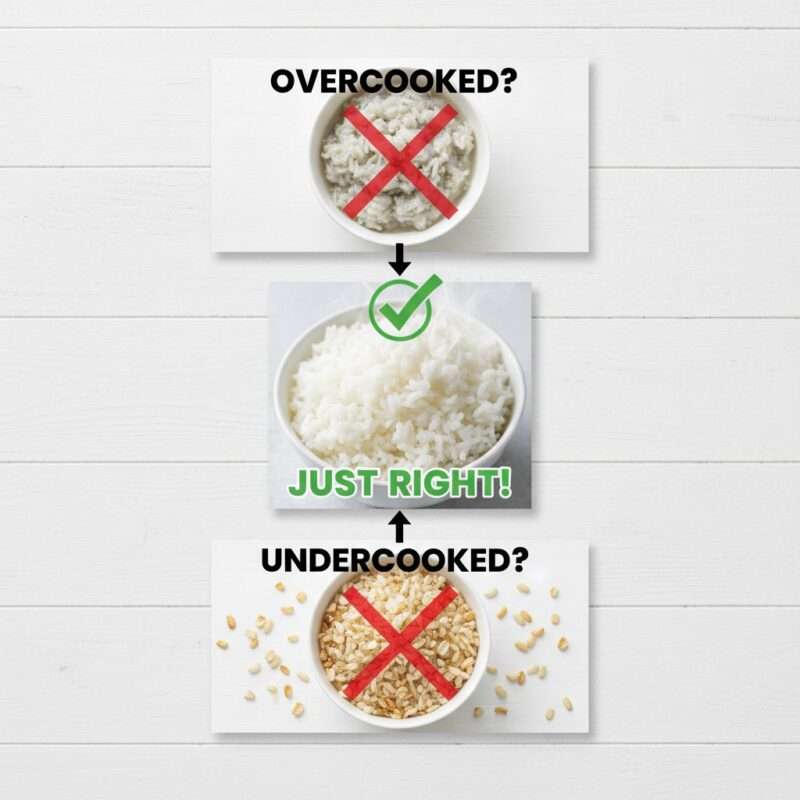
“My rice is crunchy!”
- You needed more water or more time
- Fix: Add 1/4 cup water, microwave 2 more minutes
- Next time: Use 1.25 cups water per 0.5 cup rice
“My rice is mushy/soupy!”
- You used too much water or overcooked it
- Fix: Drain excess water, let sit open to air-dry 5 minutes
- Next time: Use less water or shorter cooking time
“My egg exploded everywhere!”
- Didn’t whisk it enough, or too much power
- Fix: Clean microwave (sorry), start over
- Next time: Whisk more, reduce power, watch it closely
“Everything tastes bland!”
- Needs salt/sauce/seasoning
- Fix: Add more soy sauce, hot sauce, salt, butter, garlic powder
- Next time: Season at the end, taste, adjust
“I don’t have frozen vegetables!”
- Use canned vegetables (drain first)
- Use fresh vegetables (chop small, microwave same way)
- Skip vegetables entirely and add more egg or canned beans
- This is not ideal nutritionally but one meal without veg won’t kill you
Ingredient Substitutions:
No rice?
- Use pasta (cook separately, 8-10 minutes in microwave)
- Use instant noodles (cook according to package)
- Use oats (different texture but works)
- Use bread (make it a scrambled egg sandwich situation)
No egg?
- Use canned tuna (drain, mix in)
- Use canned chicken (drain, mix in)
- Use beans (canned, drained, heated)
- Use tofu (if available and you know how to handle it)
- Use peanut butter mixed in (weird but provides protein)
No soy sauce?
- Salt + tiny bit of vinegar or lemon
- Worcestershire sauce
- Any other sauce you like (hot sauce, ketchup, mustard)
- Bouillon cube dissolved in tiny bit of water
- Just salt and pepper (boring but functional)
No butter?
- Any oil (olive, vegetable, coconut)
- Margarine
- Skip it entirely (slightly drier but edible)
Making It Feel Like Home:
This recipe is a blank canvas. Add spices and flavors from your culture:
- Asian-style: Add sesame oil, ginger powder, top with sesame seeds
- Mexican-style: Add cumin, chili powder, top with salsa or hot sauce
- Indian-style: Add curry powder, turmeric, garam masala if you have it
- Middle Eastern: Add sumac, za’atar, or whatever spices you miss
- African: Add peanut butter to make it creamy, add your home spices
- European: Add herbs like oregano, basil, parsley
The point is: make it taste like something you’d eat at home, even if it’s a simplified version.
Scaling Tips:
Making for 2:
- Double everything
- Use bigger bowl (very important)
- Rice will take 1-2 minutes longer
- Cook 2 eggs in separate mugs (easier than one big scramble)
Making for 3-4:
- Don’t. Make two batches instead.
- Microwave can’t handle that much volume efficiently
- You’ll end up with uneven cooking
Meal Prep Option:
Make a huge batch of rice (2-3 cups dry rice) on Sunday:
- Cook rice in batches
- Store in container in fridge
- Each day, take 1 portion
- Add fresh egg + vegetables
- Heat everything together 2 minutes
- Instant meal, less daily effort
Budget Hacks:
Cheapest version possible:
- Rice: $0.40
- Egg: $0.30
- No vegetables (skip or use frozen for $0.30)
- Salt for seasoning: $0.01
- Total: $0.71-1.01
Slightly better version:
- Add canned beans ($0.40) for more protein
- Add frozen vegetables ($0.30)
- Use butter ($0.10) for richness
- Use soy sauce ($0.10) for flavor
- Total: $1.80
Both versions are cheaper than any takeout meal.
Nutritional Improvements:
To increase protein:
- Add 2 eggs instead of 1 (+7g protein)
- Add canned beans (+8g protein, +5g fiber)
- Add canned tuna (+20g protein)
To increase vegetables:
- Use 1 cup frozen vegetables instead of 1/2 cup
- Add fresh spinach (microwaves in 1 minute)
- Add canned tomatoes (drain, add with vegetables)
To reduce sodium:
- Use less soy sauce, more other spices
- Skip processed sauces, use fresh lemon juice
- Add more garlic powder, herbs
When to Make This:
- When you’re too tired to think
- When the stove is busy
- When you have exactly $2 and need food
- When you’re homesick and need comfort
- When you’ve eaten takeout too many days in a row
- When it’s 2 AM and you’re hungry
- When you need to prove to yourself you can do this
Storage:
- Eat fresh (best option)
- Store leftovers up to 3 days in fridge
- Reheat: 2 minutes in microwave, stir, 1 more minute
- Don’t freeze (rice texture gets weird)
The Emotional Part:
Some days this meal will taste amazing. Other days it’ll taste like sadness with soy sauce. That’s not about the recipe—that’s about how you’re feeling.
On hard days, just eat it anyway. Nutrition counts even when you’re sad. Taking care of yourself counts even when everything feels pointless.
And some days, this simple bowl of rice, egg, and vegetables will be exactly the comfort you need. It’s warm. It’s filling. You made it yourself. That’s enough.
Conclusion: You’re Doing Better Than You Think
Here’s what I want you to know.

Living in a hostel, far from home, cooking with a microwave and whatever fits in one shelf—this isn’t easy. Anyone who acts like it’s no big deal has forgotten what it’s really like, or they’re lying.
You’re learning to survive in a situation that’s inherently difficult. Every meal you successfully make for yourself is a small victory against the overwhelming feeling that everything is hard and nothing works right anymore.
The microwave recipes in this article aren’t going to solve homesickness. They won’t make the hostel kitchen less chaotic. They won’t bring your family closer or make cultural adjustment easier.
But they will do this: they’ll help you eat decent food without destroying your budget. They’ll give you small moments of competence when you successfully feed yourself. They’ll save you money you need for other things. And on the really hard days, they’ll be one less thing to stress about.
The Small Picture Matters
You don’t need to master cooking. You need to survive this phase of your life while staying healthy enough to chase whatever brought you here in the first place—education, work, opportunity, a better future.
Quick microwave meals aren’t Instagram-worthy. They’re not what you’d serve guests. But they’re real food that you made yourself, in circumstances that aren’t ideal, with resources that are limited.
That counts for something.
The Community Part
If you’re reading this in a hostel right now, look around next time you’re in the kitchen. Everyone else is figuring it out too. That person burning toast? Also lonely. That person with fancy meal prep? Also struggling with something you can’t see.
Share a meal if you can. Ask someone to split the cost of ingredients. Teach someone your quick recipe. Let someone teach you theirs.
The hostel kitchen can be more than just a place where you heat up food. It can be where you find your people, even temporarily. Where you help each other through this weird phase of life.
Moving Forward
Start with one recipe from this article. Just one. Make it this week. See if it works.
If it works, try another. Build up your confidence slowly. Forgive yourself for the disasters—they happen to everyone.
Save the money you’re not spending on takeout. Call home more often. Buy yourself something that makes hostel life slightly less terrible. Build an emergency fund. Whatever you need.
And on the hardest days—the days when you’re so homesick you can barely function, when everything feels wrong, when you wonder why you even came here—make yourself something warm to eat.
It won’t fix everything. But it’ll help you get through one more day.
And sometimes that’s exactly enough.
Final Practical Tips
Week One Survival Plan:
Shopping list (under $30):
- Rice (5 lb bag)
- Eggs (dozen)
- Pasta (2 boxes)
- Canned beans (4 cans)
- Frozen mixed vegetables (2 bags)
- Peanut butter
- Bread
- Butter or oil
- Salt, pepper, garlic powder
- Soy sauce or hot sauce
This will feed you for a week with variety. Mix and match ingredients. Make different combinations. You’ve got this.
Your First Three Meals:
- Breakfast: Scrambled eggs with toast (10 minutes, proves you can do this)
- Lunch: Rice bowl with egg and vegetables (15 minutes, builds confidence)
- Dinner: Pasta with whatever (15 minutes, shows variety is possible)
After these three, you’ll know you can actually cook in a hostel microwave. Everything else is just variations.
When It All Feels Too Hard:
Some days you won’t cook. You’ll eat cereal. You’ll get takeout. You’ll skip meals.
That’s okay. This isn’t about perfection. It’s about doing better more often, not being perfect always.
Progress, not perfection. Survival, not excellence.
You’re doing great. You’re feeding yourself in difficult circumstances. That’s enough.
Bookmark this article. Share it with someone who needs it. And next time you successfully make yourself a meal in that chaotic hostel kitchen, remember: you’re more capable than you think.